 Flag Grids
How to Play Flag Puzzle
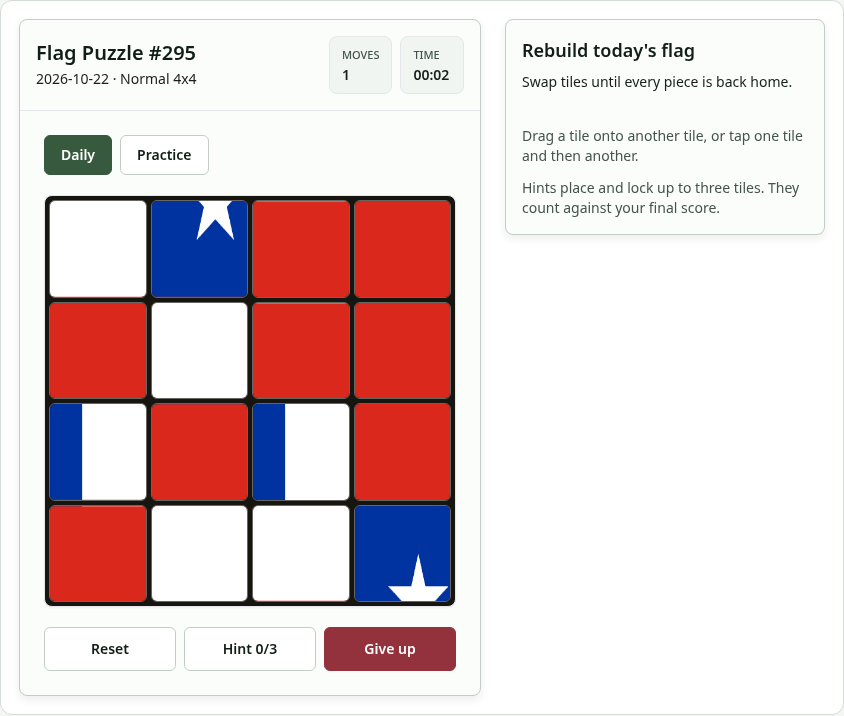
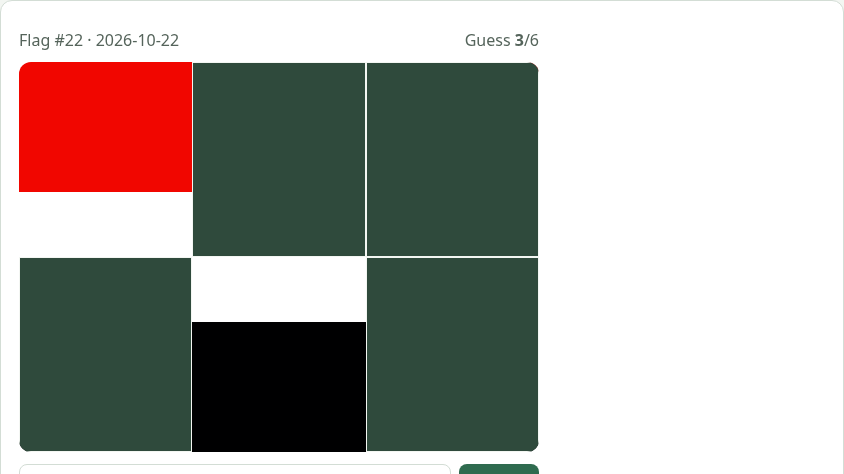
- See the scrambled flag. The daily flag is split into a 4×4 grid of 16 tiles, and the tiles are shuffled.
- Move a tile. Drag a tile onto another tile, or tap one tile and then another, to swap them.
- Keep swapping. Continue until every tile is back where it belongs. The move counter and timer track your run.
- Use a hint if needed. You have up to three hints per puzzle. A hint locks a tile into its correct position so it can no longer move.
- Finish the flag. When every tile is in place, the puzzle is solved and the country is revealed with your move count.
- Share your moves. Share your result and come back tomorrow for a new flag.
What Is Flag Puzzle?
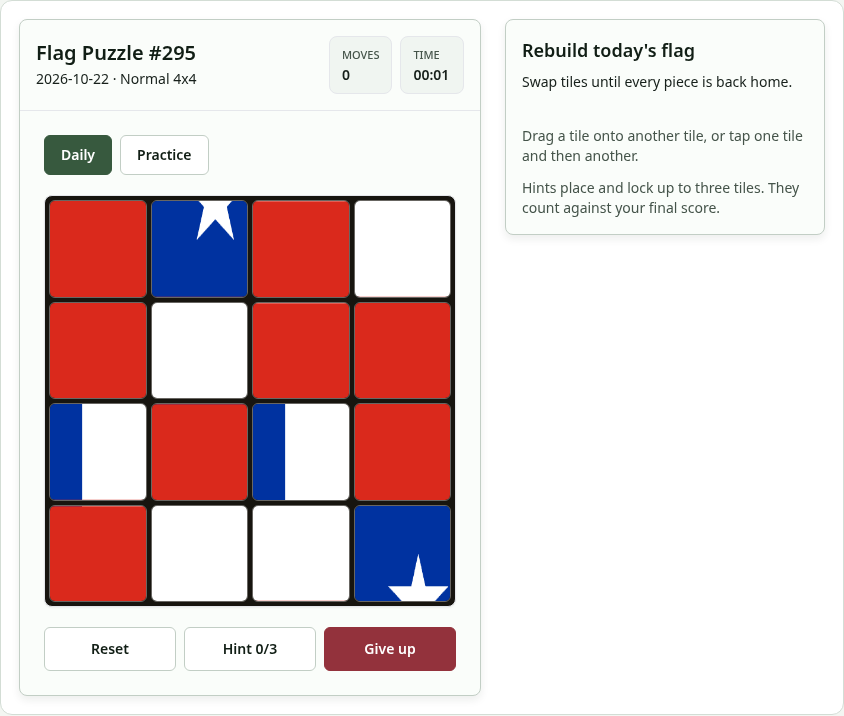
Flag Puzzle is a daily flag game that mixes the satisfaction of a jigsaw with the knowledge of a geography quiz. Each day one national flag is sliced into a 4×4 grid of sixteen square tiles, and the tiles are shuffled. Your job is to swap tiles until the flag is whole again. There is no time limit and no penalty for thinking, but every swap counts as a move, so the challenge is to rebuild the flag as efficiently as possible.
The game is easy to pick up because you never need to type an answer. Children can solve it by matching colours, while flag experts can plan the whole solution in their head before the first swap. Simple flags such as tricolours make quick warm-ups. Flags with seals, coats of arms or detailed emblems, such as those of Mexico, Ecuador, Spain or Sri Lanka, become real brain teasers because many tiles look alike.
Rules and Scoring
| Rule | Detail |
|---|---|
| Board | 4×4, 16 tiles |
| Action | Drag one tile onto another, or tap two tiles, to swap |
| Hints | Up to 3 per puzzle; each locks one tile in place |
| Score | Number of moves (lower is better) and hints used |
| Timer | Shown for bragging rights; no time limit |
| New puzzle | Every day |
The minimum number of swaps needed to solve a scrambled board depends on how the tiles are shuffled. Every swap that puts one tile in its correct place is progress, and the best swaps place two tiles at once. Good players look for these double swaps first.
Tips and Strategies
Lock in the corners and edges
Like a jigsaw, edges are easiest. Flag corners often contain unique features, such as a canton, a triangle at the hoist or the end of a stripe, so place the four corners first and work inward.
Look for two-way swaps
If tile A is sitting in tile B’s spot and tile B is sitting in tile A’s spot, one swap fixes both. Scan the board for these pairs before you make single-tile moves. This is the key to a low move count.
Use stripes as guides
Horizontal stripes tell you which row a tile belongs to; vertical stripes tell you which column. Once you know the flag, every tile with only a single colour can be narrowed to a row or column immediately.
Save hints for detailed emblems
Plain-colour tiles are easy to place by elimination. Hints are most valuable for tiles that show part of a coat of arms or complex emblem, where several tiles look similar.
Learn the flag first
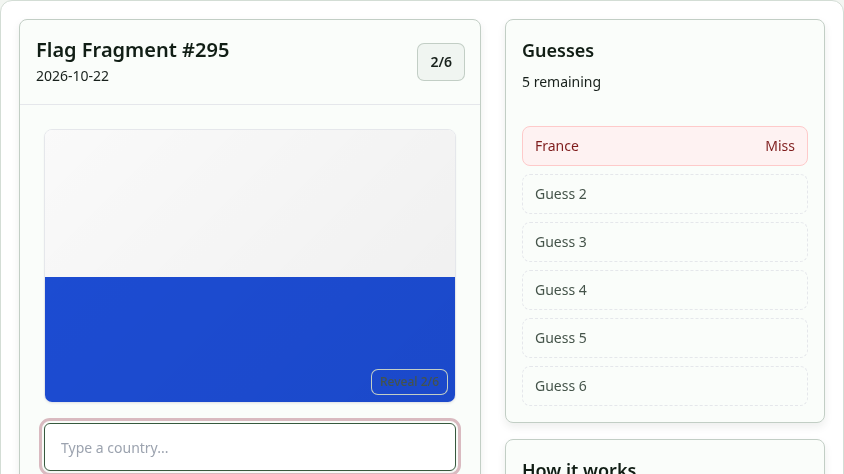
If you do not recognise the flag, play Guess the Flag or Flag Fragment to build your knowledge. The better you know flags, the fewer moves you need.
Features
- New flag daily: one shared puzzle for everyone.
- Simple controls: drag or tap tiles to swap them.
- Three hints: get unstuck without giving the whole answer away.
- Saved progress: leave and come back without losing your board.
- Shareable result: post your move count and hints used.
- No time limit: relaxed play at your own pace, with a timer if you want to race.
Why Tile Puzzles Are So Relaxing
Sliding and swapping tile puzzles go back to the famous 15-puzzle of the 1880s, which caused a craze across North America and Europe. The appeal has not changed: you can see the goal, every move takes you a little closer to it, and the finished picture appears all at once. Using national flags adds a learning layer. While you rebuild a flag you notice its proportions, the exact position of an emblem and the order of its stripes, details that help you in every other flag quiz.
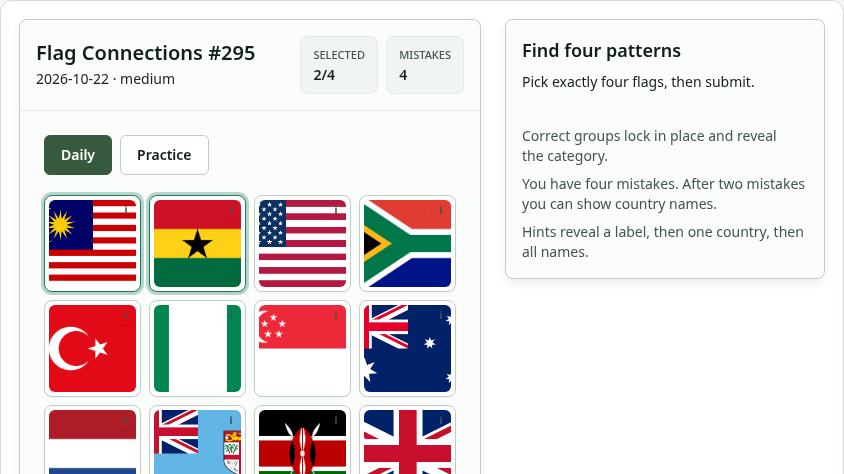
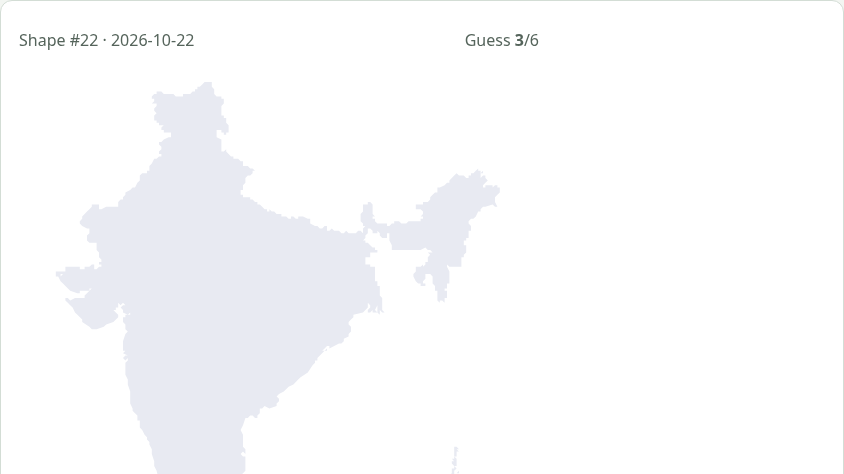
Because there is no time limit, Flag Puzzle suits a coffee break or winding down before bed. Many players combine it with the other daily games on Flag Grids: solve the puzzle, then try Flag Connections and the Country Shape challenge for a complete daily geography workout.
Related Games
For more flags, try Flag Connections, where you sort sixteen flags into four hidden groups, or create your own shareable flag collage with the Flag Grid Maker. If you prefer maps, Higher or Lower: Population tests how well you know the size of the world’s countries.